Waking up with a dry mouth again?
Maybe your throat feels scratchy. Perhaps your morning breath isn’t as pleasant as you’d like. Or maybe your partner has pointed out that you sleep with your mouth open.
It is very common to breathe through your mouth while sleeping, but if it happens often, you should take it seriously.
We’re always considering mouth breathing in the context of oral health here at Pasqua South Dental in Regina. Your salivary glands do a lot of work during sleep. It cleans away food particles, balances pH levels, and safeguards against acidity, helping protect your teeth and gums. If you keep your mouth open for hours, it dries out, and this natural protection diminishes.
So, what can you actually do about it? Here are four things you can try tonight.
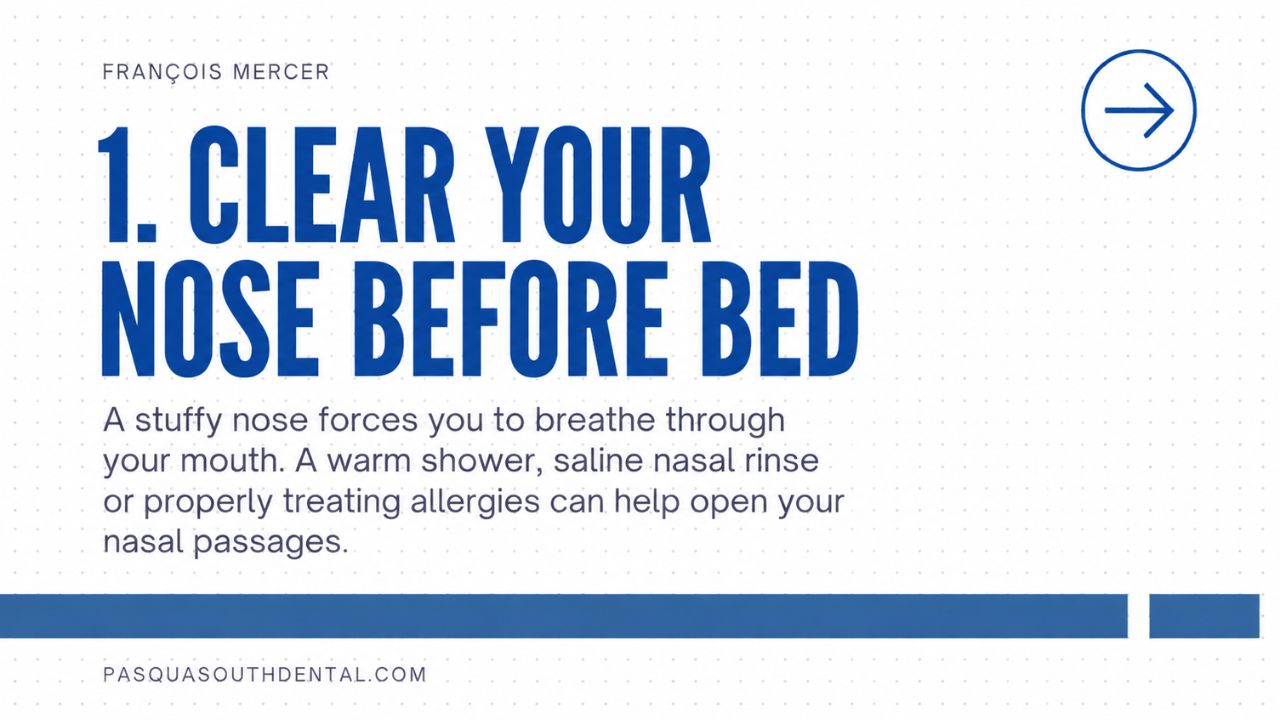
1. Start by Clearing Your Nose
Although this seems like a no-brainer, it’s the place to begin.
Your body will naturally turn to mouth breathing if it is hard to breathe through your nose. A cold, seasonal allergies, or simple congestion may be enough to cause it.
Before bed, a warm shower or saline nasal rinse may make nasal breathing more comfortable. If you’re always congested due to allergies, it may be a good idea to talk to your health care provider about managing your allergies.
Don’t try to close your mouth. This makes it easier to breathe through your nose.
2. Try a Nasal Strip
You’ve likely noticed the little strips you can find across your nose.
For some people, nasal strips can slightly open the nasal passages and make it easier to breathe through your nose while sleeping.
While they can’t fix all causes of mouth breathing, they may be a simple option to try if your problem is mild nasal restriction or congestion.
These sleep hacks don’t involve taping your mouth shut, as some of the sleep hacks on the internet do.
We will get to that one in a minute.
3. Add Some Humidity to the Room
Anyone who has lived through a Saskatchewan winter knows how dry the air inside our homes can get.
The effects of mouth breathing can be even more noticeable in that dryness.
Running a humidifier in your bedroom may help reduce some of the dry mouth, dry throat and nasal irritation you experience overnight.
It will not cure the cause of your mouth breathing, but it can allow you to sleep much more comfortably while you work out the cause of your mouth breathing.
Just remember to clean your humidifier regularly according to the manufacturer’s instructions.
4. Figure Out Why You Are Mouth Breathing
This is the big one. If you occasionally mouth breathe because you have a cold, there probably is not much mystery involved.
If you wake up with your mouth dry almost every morning, though, there may be something else going on.
Ongoing nasal congestion, allergies, structural problems in the nose or airway, enlarged tonsils or adenoids, snoring and sleep related breathing problems (sleep apnea) can be associated with regular mouth breathing.
Sometimes, your dental visit can give you a hint.
A dentist may notice signs associated with chronic dry mouth, including irritated oral tissues, gum concerns, bad breath or an increased risk of tooth decay. We can discuss your symptoms with you and if appropriate, refer you to your physician or other health care provider for further evaluation and treatment of your underlying condition.
Should You Tape Your Mouth Shut at Night?
Mouth taping has become a pretty popular social media trend.
The idea is simple: tape your lips together so you are forced to breathe through your nose.
The problem is that mouth breathing may be happening because you are having difficulty breathing properly through your nose in the first place.
Forcing your mouth closed will not solve a nasal blockage or an undiagnosed sleep breathing problem.
That’s why we’d prefer to help people figure out why they are mouth breathing, rather than jumping on the next sleep craze.
Why Does Mouth Breathing Matter to Your Teeth?
Your mouth is designed to have saliva present.
Saliva acts as a barrier to acids, buffers against bacteria, keeps oral tissues at an optimal temperature, and is essential for preventing tooth decay.
When your mouth becomes extremely dry every night, you lose some of that protection.
Over time, chronic dry mouth can contribute to cavities, bad breath, irritated gums, and general discomfort.
Although it may be more of a sleep problem than a dental problem, the effects can certainly show up in the mouth.
Waking Up With a Dry Mouth?
Talk to your dentist about dry mouth at your next appointment.
At Pasqua South Dental, we strive to educate people across Regina about oral health and how they can maintain it to keep their teeth and gums healthy.
We may not treat the underlying cause of mouth breathing, but your mouth can give us valuable clues that something deserves a closer look.
If it has been a while since your last checkup, contact Pasqua South Dental in Regina to book an appointment.
Your teeth will appreciate the extra attention. You may also feel a little better in the mornings.