You’re enjoying a meal when suddenly, you bite into something and feel a sharp pain in one of your teeth.
You stop chewing, try the other side of your mouth, and everything seems fine. But the next time you bite down on that tooth, there it is again.
Sound familiar?
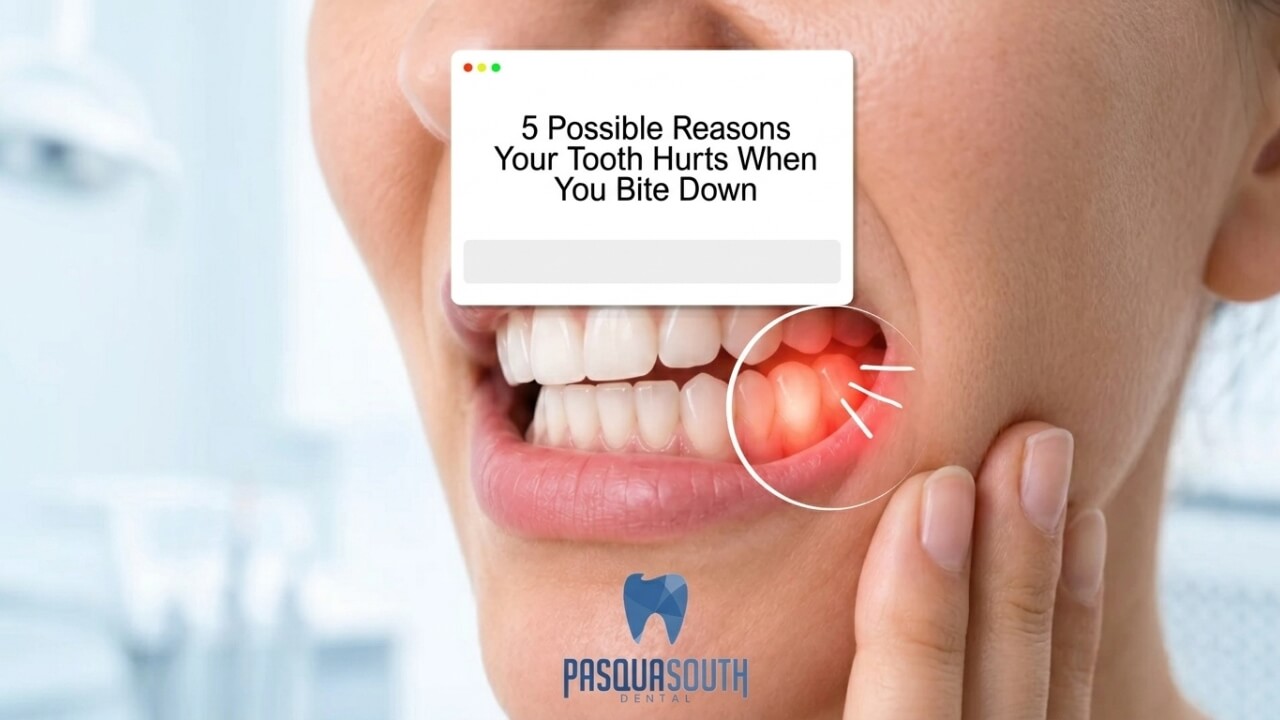
If your tooth hurts when you bite down, it could be caused by a cavity, a cracked tooth, a damaged filling, an infection, or inflammation around the tooth.
Some causes are relatively simple to treat, while others need attention before they become more serious.
Here are five possible reasons your tooth hurts when chewing and what you should do about it.
1. You Might Have a Cracked Tooth
A cracked tooth doesn’t always look cracked.
In fact, some cracks are so small that you won’t be able to see them in the mirror. But you might certainly feel them when you eat.
When you bite down, pressure can cause the cracked portions of your tooth to move slightly. This may irritate the sensitive tissues inside the tooth, creating sharp pain.
One interesting clue is that a cracked tooth can sometimes hurt more when you release your bite than when you first bite down.
Cracks can happen from chewing hard foods, grinding your teeth, or simply years of wear.
And while not every crack requires extensive treatment, it’s worth having a dentist take a look before the damage gets worse.
2. You Could Have a Cavity
Most people associate cavities with a constant toothache, but that’s not always how they begin.
A cavity can develop without causing much discomfort at first. As the decay progresses deeper into your tooth, pressure from chewing may start to become painful.
You might also notice tooth sensitivity when eating something particularly hot, cold, or sweet.
The tricky part? You can’t always see a cavity, especially if it’s forming between your teeth.
Depending on how far the decay has progressed, treatment might involve a simple filling or something more involved.
3. An Old Filling Might Be Causing Trouble
Dental fillings are designed to restore teeth, but they don’t necessarily last forever.
Over time, a filling can become worn, cracked, or loose. When that happens, biting pressure can irritate the tooth underneath.
Sometimes the issue is particularly noticeable when chewing something firm.
If you’ve recently had a filling or crown placed and your bite suddenly feels uneven, that’s another reason to contact your dentist. Occasionally, a restoration may need a small adjustment.
The good news is that some tooth filling-related problems can be addressed without extensive treatment.
4. You May Have a Tooth Infection
Tooth infections can develop when bacteria reach the inner tissues of a tooth or the surrounding areas.
One potential symptom is pain when biting or chewing.
Unlike occasional sensitivity, an infection may also cause persistent throbbing pain, swelling, a bad taste in your mouth, or tenderness around the gums.
And here’s something important: a tooth infection doesn’t necessarily go away just because the pain temporarily stops.
If an infection is suspected, dental treatment is needed. Depending on the situation, that could involve root canal treatment, drainage, or another procedure.
If you have facial swelling, fever, or difficulty swallowing or breathing, seek urgent medical attention.
5. You Could Be Grinding or Clenching Your Teeth
Do you ever wake up with a sore jaw? Or catch yourself clenching your teeth while concentrating at work?
You might be putting more pressure on your teeth than you realize.
Grinding and clenching can place stress on the teeth and the tissues supporting them. Over time, this can contribute to tenderness, sensitivity, and even cracks.
Some people grind their teeth while sleeping and have no idea they’re doing it. It is also known as Bruxism.
A dentist can look for signs of grinding, examine your bite, and determine whether a night guard or another approach might help.
What Should You Do If Your Tooth Hurts When You Bite Down?
First, try not to keep testing the painful tooth by biting on it repeatedly.
Until you can have it examined, consider:
- Chewing on the opposite side of your mouth.
- Avoiding particularly hard or crunchy foods.
- Gently brushing and flossing to keep the area clean.
- Using an over-the-counter pain reliever if it’s safe for you, following the product directions.
These steps may help with discomfort, but they won’t necessarily address what’s causing it.
If the pain continues, comes back repeatedly, or becomes worse, book a dental appointment.
When Is Tooth Pain Something to Worry About?
Here’s a simple way to think about it.
Your teeth are designed to handle the pressure of everyday chewing. If one tooth consistently hurts when you use it, something may need attention.
It doesn’t automatically mean you need a root canal or that you’re going to lose the tooth.
It does mean the problem is worth investigating.
A dentist can examine the area, check your bite, and take X-rays when needed to help determine the cause.
And in many cases, catching a dental problem earlier gives you more treatment options.
Experiencing Tooth Pain in Regina?
At Pasqua South Dental, we help Regina patients understand what’s causing their dental discomfort and what can be done about it.
Whether it’s a damaged filling, a cracked tooth, or another dental concern, our team can examine the problem and explain your treatment options.
Don’t let one painful tooth decide what you can eat.
Contact Pasqua South Dental in Regina to book an appointment. New patients and dental emergencies are welcome.